Expanding LDA Access Through Manual Drafting
Consumer, Desktop & Mobile Web Design
Product Strategy
UX/UI Design
Animation
PRODUCT
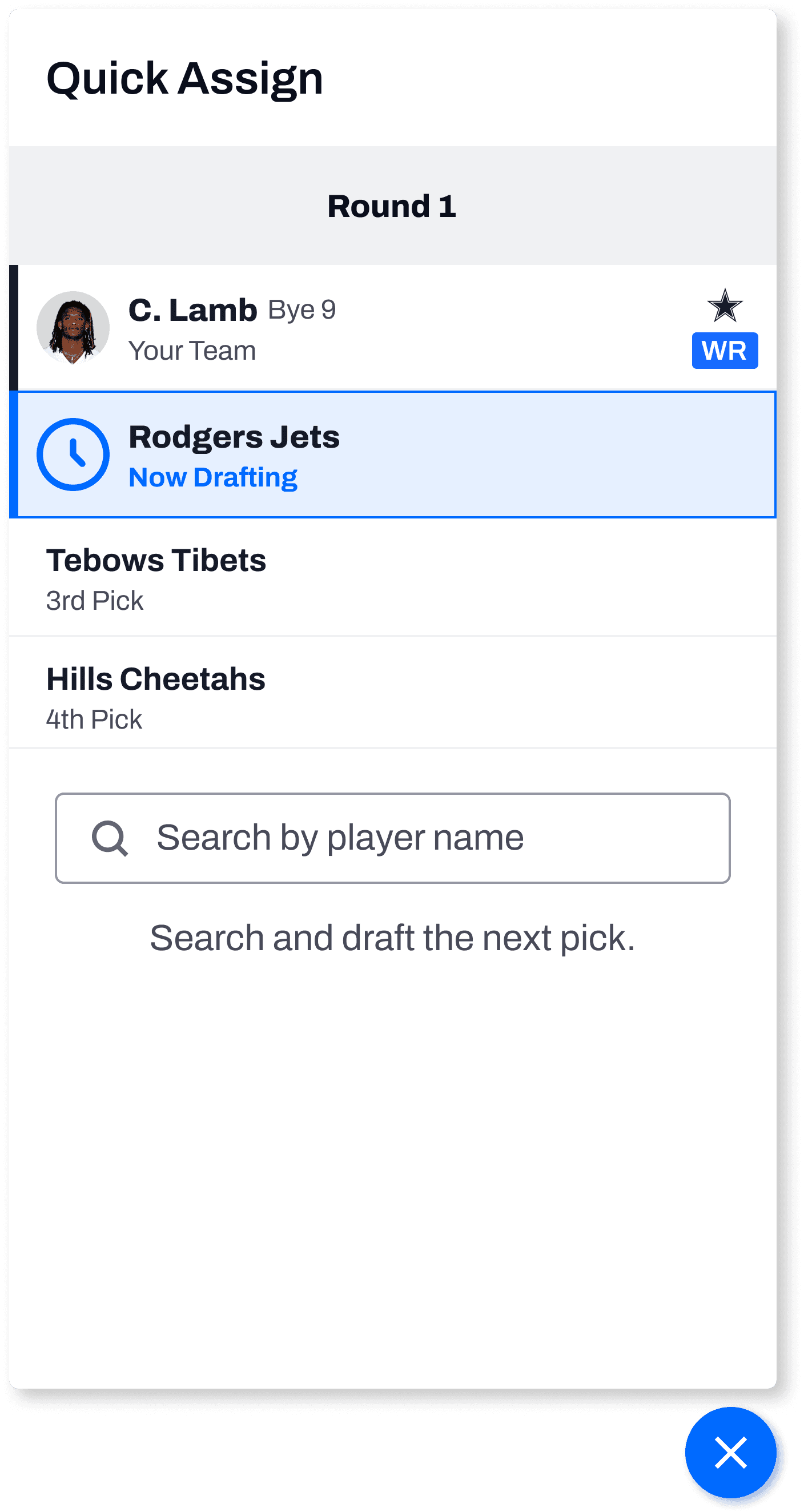
The Live Draft Assistant (LDA) is PFF's premier fantasy draft tool, giving users real-time pick recommendations, availability projections, and data-science-powered guidance, helping them make smarter decisions at every pick. To use it, users sync their existing fantasy league directly from a supported platform, giving the LDA access to their roster, scoring settings, and live draft picks.
PROBLEM
The LDA supported Yahoo, ESPN, and Sleeper — the three most popular platforms. But survey data showed that roughly 25% of active users were drafting on platforms we didn't support, primarily NFL.com, CBS Sports, and MyFantasyLeague.
25% had no access to the LDA.

Platform sync created a bottleneck forcing users on unsupported platforms to drop off before they could even reach the LDA.

HYPOTHESIS
Adding more platform integrations wasn't a scalable fix, third-party syncs are brittle by nature, and every new integration adds complexity for marginal coverage.
By creating manual draft controls, the LDA could deliver its full intelligence without relying on a platform connection at all.
GOAL #1
Increase retention and conversion
Number of subscribers who use the LDA and number of users converted.
GOAL #2
Improve Reliability
Increase LDA completion rate and reduce refund rate.
Solution
Drafts are unpredictable. A pick can happen in 10 seconds or drag out to 90. Users aren't always watching closely; they're doing their own research, chatting with other managers, or stepping away between rounds. Any friction in the pick-entry flow risked users falling behind and losing confidence in the tool.
Users didn't need the tool to know everything about their league. They needed it to know who had been drafted. If a user could quickly log each pick as it happened, the LDA could handle the rest: who to target, who would be available, when to reach for a player.
The problem became: How do we build the fastest possible pick-logging experience while maintaining accuracy?
DESIGN Decision 01
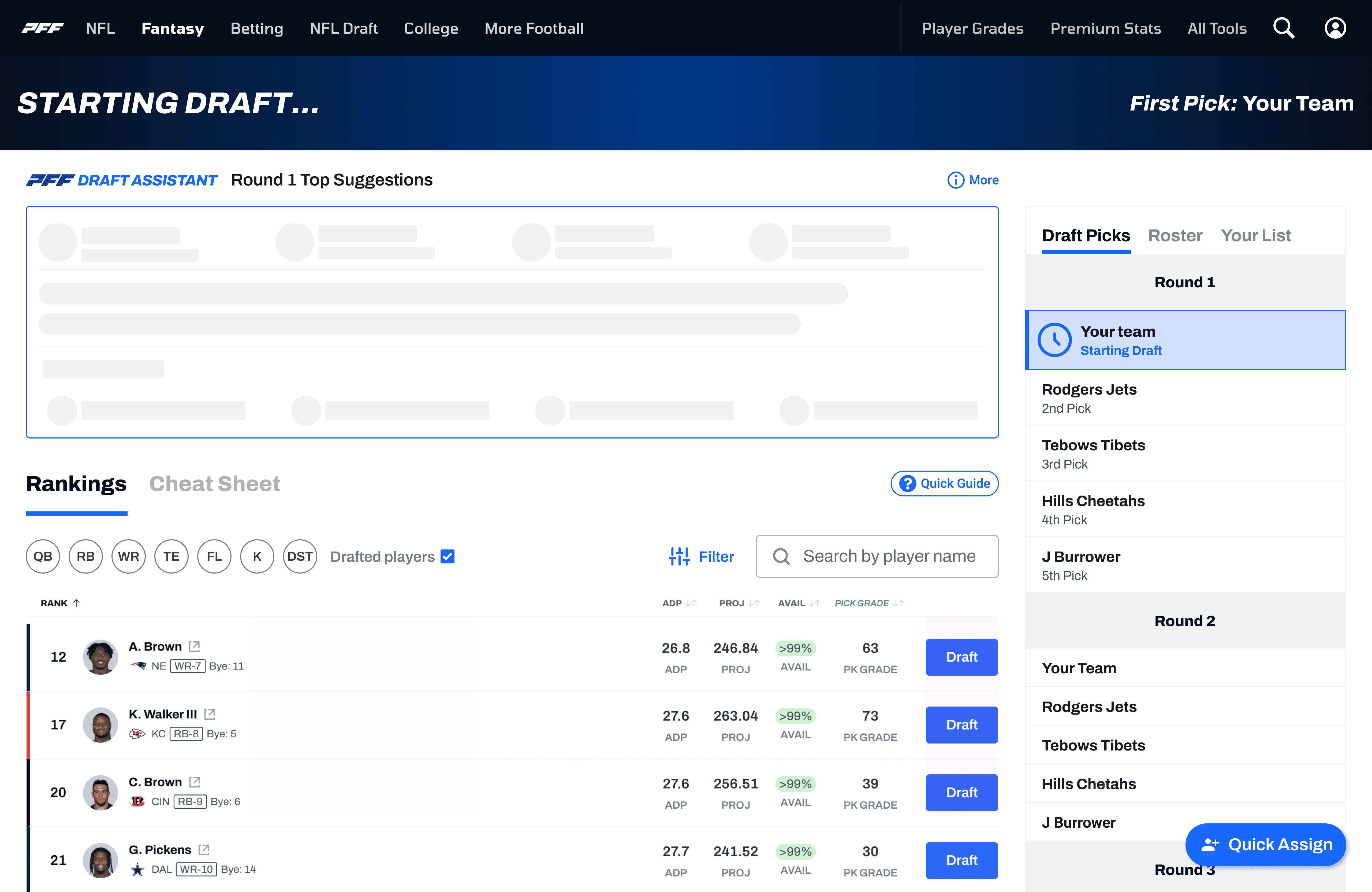
The LDA is a research tool. Users are often mid-thought, evaluating players, planning their next pick. Interrupting that flow to log someone else's pick risked losing their place entirely. A dedicated pick-entry view with a search input serves as the primary logging experience, letting users quickly find and assign picks without losing their place in the LDA.
Quick Assign FAB

Quick Assign View
DESIGN Decision 02
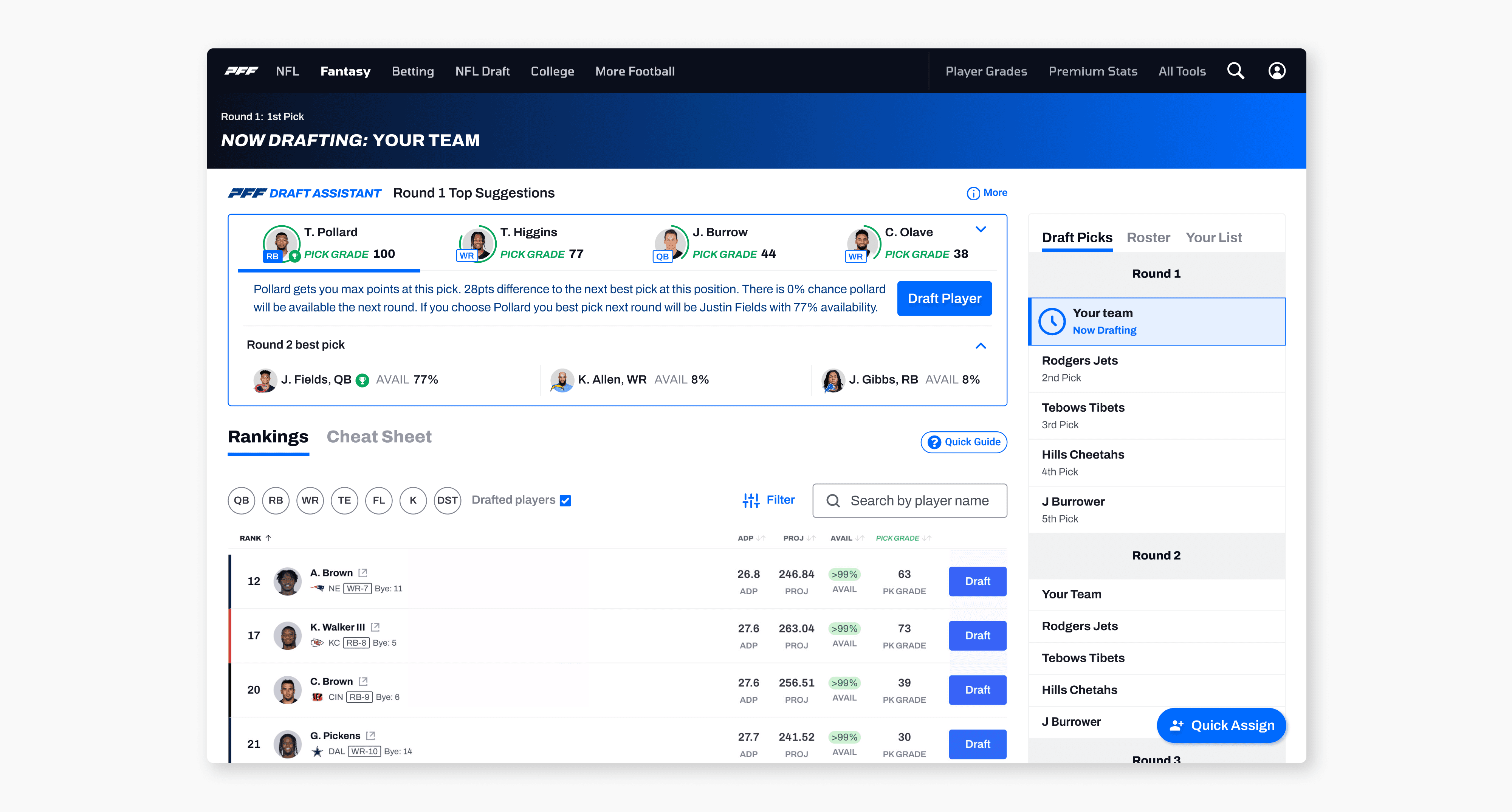
In a fast-moving draft, logging the wrong pick for the wrong team is an easy mistake. The status banner surfaces the current round, who's on the clock, and the last pick made, so users always have the context they need without having to track it themselves. Animated transitions between banner states draw the eye when the draft advances, giving users a natural cue that a new pick has been made.


Desktop View

Mobile View
DESIGN Decision 03
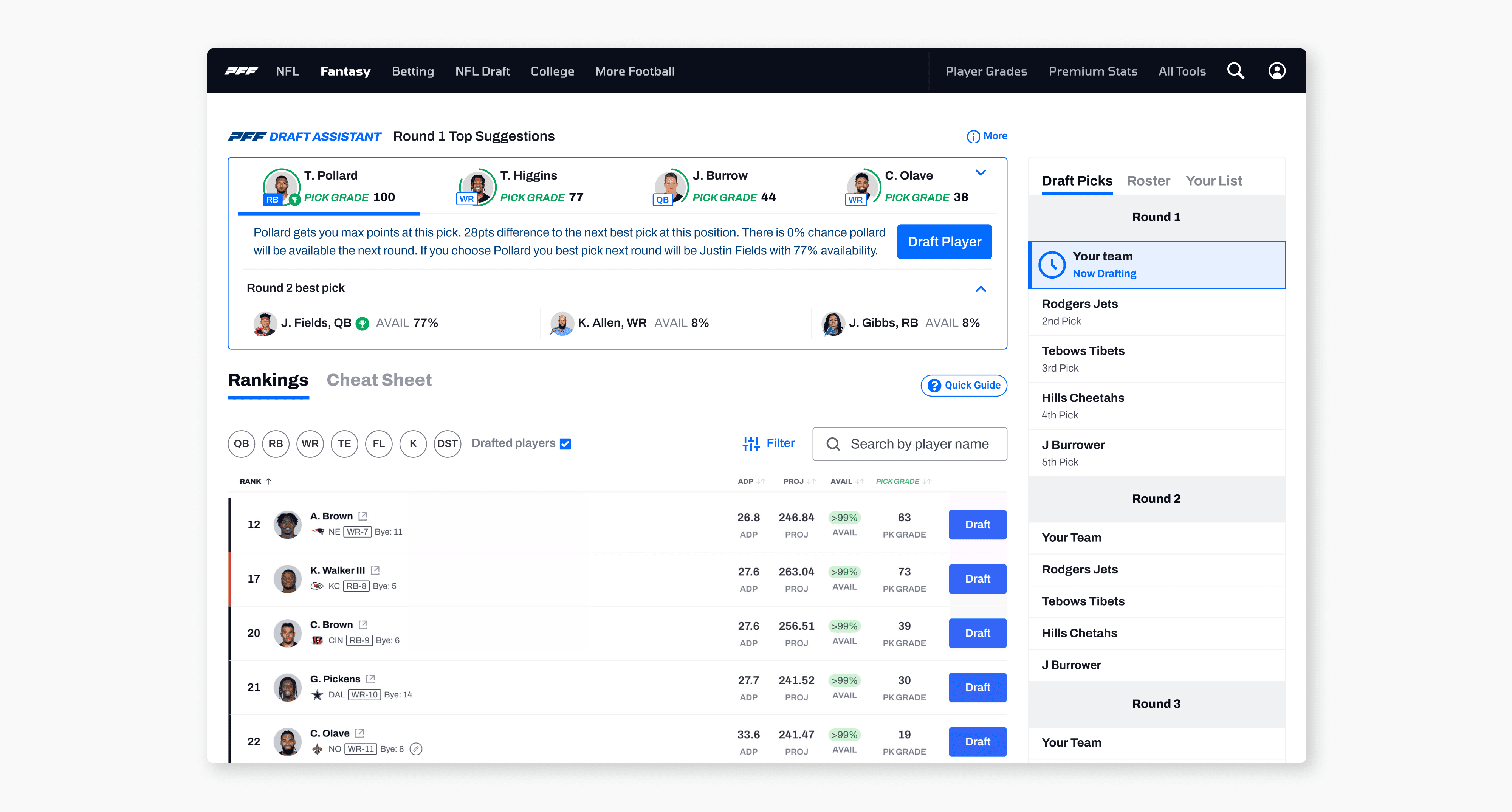
Introducing a new mode risks fragmenting the experience, users shouldn't have to relearn a tool mid-draft. By building manual drafting into the existing LDA rather than alongside it, the interaction stays familiar. It also means future league formats like dynasty and rookie can be supported without building from scratch.
OUTCOME
Success would be measured by two key metrics: increased LDA usage among previously excluded users, and draft completion rate, specifically a reduction in abandonments caused by sync errors.
Looking ahead, manual drafting opens up possibilities that platform integrations couldn't support. Maintaining third-party syncs would no longer be a prerequisite for expanding LDA access, freeing the team to focus on the experience rather than integration upkeep. It also creates a path to supporting league formats like dynasty and rookie drafts, which have always been difficult to accommodate through platform connections alone.